
Understand the Transcatheter Aortic Valve Replacement
Best Interventional cardiologist in Hyderabad Heart Specialist in Gachibowli
A minimally invasive treatment for severe aortic valve stenosis
Transcatheter Aortic Valve Replacement (TAVR), also known as Transcatheter Aortic Valve Implantation (TAVI), is a minimally invasive procedure used to replace a narrowed or diseased aortic valve. Unlike traditional open-heart valve replacement surgery, TAVR is performed using a catheter, most commonly introduced through an artery in the groin.
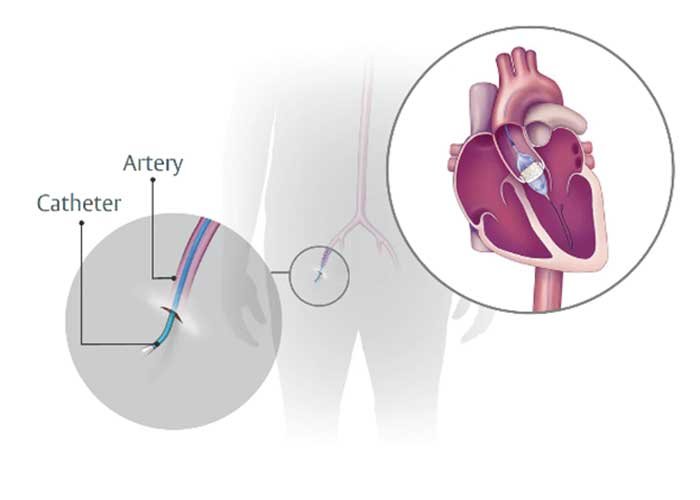
During the procedure, a specially designed biological replacement valve is positioned inside the diseased aortic valve. Once expanded, the new valve begins functioning immediately, improving blood flow from the heart to the body.
Who may benefit from TAVR?
TAVR may be considered for patients with severe symptomatic aortic stenosis, particularly when the condition causes symptoms such as:
- Breathlessness, especially during activity
- Chest discomfort or pain
- Fatigue and reduced exercise tolerance
- Dizziness or fainting
- Swelling of the legs
- Reduced ability to perform everyday activities
The suitability of TAVR depends on several factors, including the patient’s age, symptoms, heart function, valve anatomy, overall health, and surgical risk. A specialised heart team evaluates each patient before recommending the most appropriate treatment.
FAQs
Who may benefit from TAVR?
TAVR may be considered for patients with severe symptomatic aortic stenosis, particularly when the condition causes symptoms such as:
Breathlessness, especially during activity
Chest discomfort or pain
Fatigue and reduced exercise tolerance
Dizziness or fainting
Swelling of the legs
Reduced ability to perform everyday activities
The suitability of TAVR depends on several factors, including the patient's age, symptoms, heart function, valve anatomy, overall health, and surgical risk. A specialised heart team evaluates each patient before recommending the most appropriate treatment..
How is TAVR performed?
TAVR is generally performed in a catheterisation laboratory or hybrid operating room.
The procedure typically involves:
- A small catheter is introduced through a blood vessel, usually in the groin.
- The replacement valve is guided through the artery toward the heart.
- The new valve is positioned within the diseased aortic valve.
- The replacement valve is expanded and secured in place.
- The catheter is removed and the access site is closed.
The new valve takes over the function of the damaged valve, allowing blood to flow more effectively.
Benefits of TAVR
Depending on the individual patient’s condition, TAVR can offer several potential benefits:
Minimally invasive approach
No large chest incision or opening of the breastbone is generally required.
Shorter recovery
Many patients can resume normal activities sooner than with traditional surgical valve replacement.
Less physical stress
The procedure may be an option for patients for whom conventional surgery carries increased risk.
Improved symptoms and quality of life
Successful treatment can improve breathlessness, fatigue and exercise capacity
Is TAVR safe?
TAVR is an established treatment, but like any medical procedure, it has potential risks. These can include bleeding, vascular complications, stroke, infection, heart rhythm disturbances, kidney problems, valve leakage, or the need for a pacemaker in some patients.
A detailed evaluation is essential to assess the potential benefits and risks for each individual.
TAVR at Our Centre
Advanced structural heart care with a personalised approach
Our team provides comprehensive evaluation and treatment for patients with aortic valve disease, using advanced imaging and a multidisciplinary heart-team approach to determine whether TAVR is appropriate.
From diagnosis and pre-procedure assessment to valve implantation and follow-up, every stage of care is planned with the patient’s safety, comfort and long-term heart health in mind.