
Advanced, Minimally Invasive Treatment for Coronary Artery Disease
Coronary interventions are minimally invasive catheter-based procedures used to diagnose and treat blockages or narrowing in the arteries supplying blood to the heart. These procedures can restore blood flow to the heart muscle, relieve symptoms and, in appropriate patients, reduce the risk of serious cardiac complications.
With advanced imaging, modern catheter-based techniques and personalised treatment planning, coronary interventions offer an effective alternative to open-heart surgery for many patients.
What Are Coronary Interventions?
Coronary intervention is performed through a small puncture, usually in the wrist or groin, rather than through a large surgical incision. A thin catheter is guided through the blood vessels to the coronary arteries, allowing the cardiologist to identify and treat narrowed or blocked arteries.
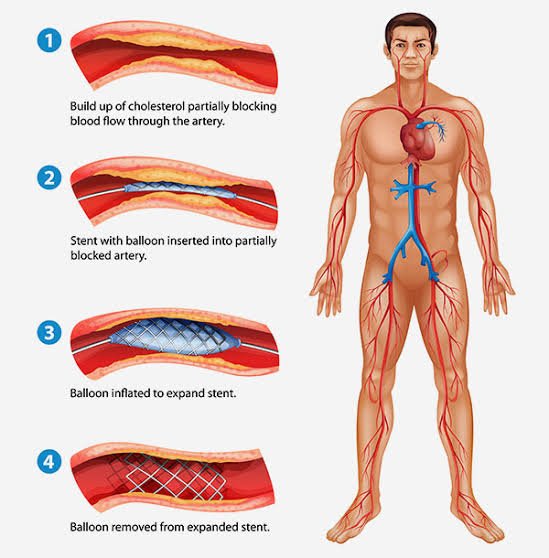
The most common procedure is Percutaneous Coronary Intervention (PCI), also known as coronary angioplasty.
Common Coronary Procedures
Coronary Angioplasty & Stenting
A small balloon is used to open a narrowed coronary artery. A coronary stent may then be placed to keep the artery open and improve blood flow.
Complex Coronary Interventions
Some blockages are particularly difficult to treat because they are heavily calcified, located at artery branches, or involve long or multiple segments. Advanced techniques and specialised devices may be used to treat these complex lesions.
Chronic Total Occlusion (CTO) Intervention
A CTO is a coronary artery that has been completely blocked for a prolonged period. Specialised catheter techniques can sometimes be used to cross and open these challenging blockages, potentially improving blood flow and symptoms.
Rotational Atherectomy
In severely calcified arteries, specialised technology can be used to modify and prepare the calcium before balloon angioplasty and stent placement. This can help facilitate successful treatment in selected patients.
When May Coronary Intervention Be Recommended?
Coronary intervention may be considered for patients with:
- Significant coronary artery blockages
- Angina or recurring chest discomfort
- Shortness of breath related to coronary artery disease
- Reduced blood flow to the heart
- Acute coronary syndromes or heart attack
- Selected complex or heavily calcified coronary lesions
The recommended treatment depends on the location and severity of the blockage, symptoms, heart function and the patient’s overall health.
Why Choose Coronary Intervention?
Modern coronary interventions can provide:
Minimally invasive treatment
Performed through a small vascular access site rather than conventional open-heart surgery.
Restoration of blood flow
Helps improve circulation to areas of the heart affected by narrowed or blocked arteries.
Symptom relief
Can reduce angina and improve exercise tolerance in appropriately selected patients.
Treatment of complex blockages
Advanced techniques can be used for selected challenging coronary lesions.
Faster recovery
Many catheter-based procedures allow patients to recover more quickly than traditional surgical approaches.
Advanced Coronary Care
Every patient is different. Treatment planning may involve coronary angiography, advanced cardiac imaging and physiological assessment of coronary blockages to determine whether an intervention is necessary and which approach is most appropriate.
Our approach focuses on precision, safety and personalised care, with the goal of achieving the best possible outcome while using the least invasive treatment appropriate for the patient.
Take the Next Step Towards Better Heart Health
If you have been diagnosed with coronary artery disease, persistent chest discomfort, or a coronary blockage, a specialist evaluation can help determine the most appropriate treatment.
Book a Consultation
Contact Our Cardiology Team