
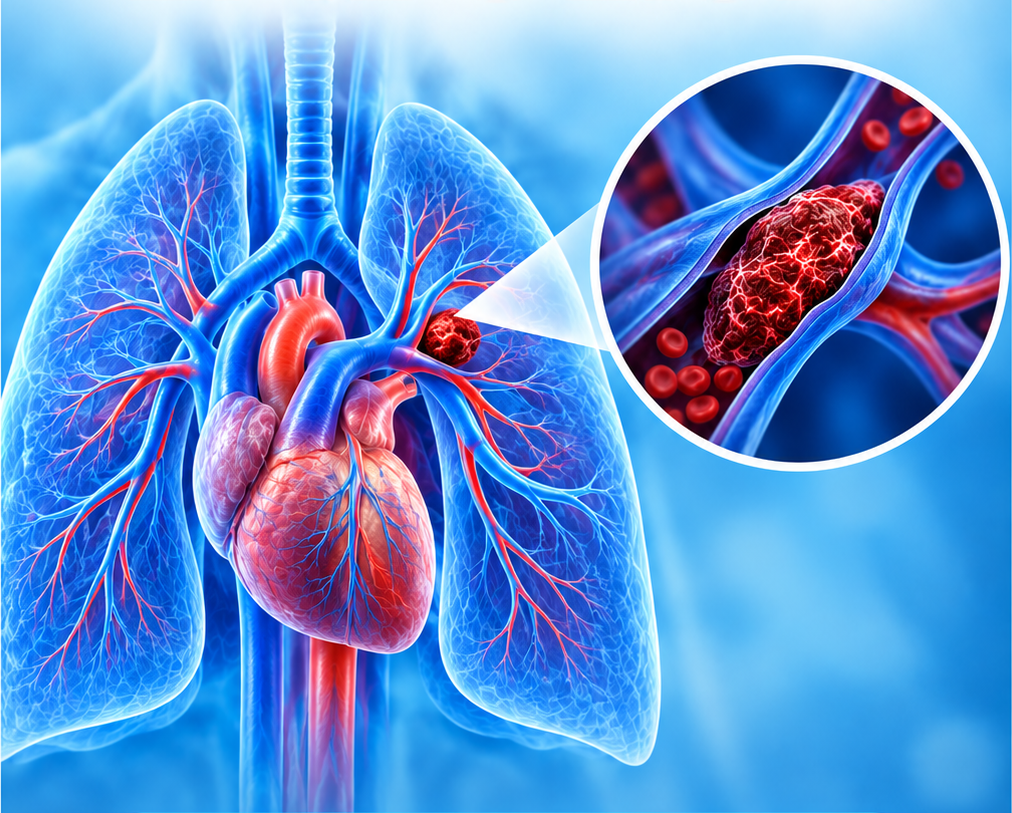
Diagnosis
Doctors may use a combination of clinical assessment and diagnostic tests to identify pulmonary embolism. These may include:
- CT Pulmonary Angiography (CTPA)
- Blood tests such as D-dimer
- ECG and echocardiography
- Doppler ultrasound of the legs
- Other imaging or blood tests when required
Treatment
Treatment depends on the size of the clot, symptoms, risk level and the patient’s overall condition. It may include:
- Anticoagulant medicines (blood thinners) to prevent clot growth and new clots
- Thrombolytic therapy in selected patients with severe or life-threatening PE
- Catheter-directed procedures to remove or dissolve the clot in appropriate cases
- Surgical or mechanical clot removal in selected high-risk situations
- Treatment of the underlying cause and prevention of recurrent clots
When to Seek Emergency Medical Care
Sudden breathlessness, severe chest pain, coughing up blood, rapid heartbeat, dizziness or fainting can be signs of a potentially life-threatening pulmonary embolism. Immediate medical evaluation is important.
Expert Care for Pulmonary Embolism
Pulmonary embolism requires prompt assessment and an individualized treatment approach. With appropriate diagnosis, risk assessment and timely intervention, many patients can be treated effectively and the risk of recurrence can be reduced.
Dr. Shashi Vardhan Janjirala provides specialized cardiovascular and endovascular care, including evaluation and management of vascular conditions associated with blood clots and pulmonary embolism.