
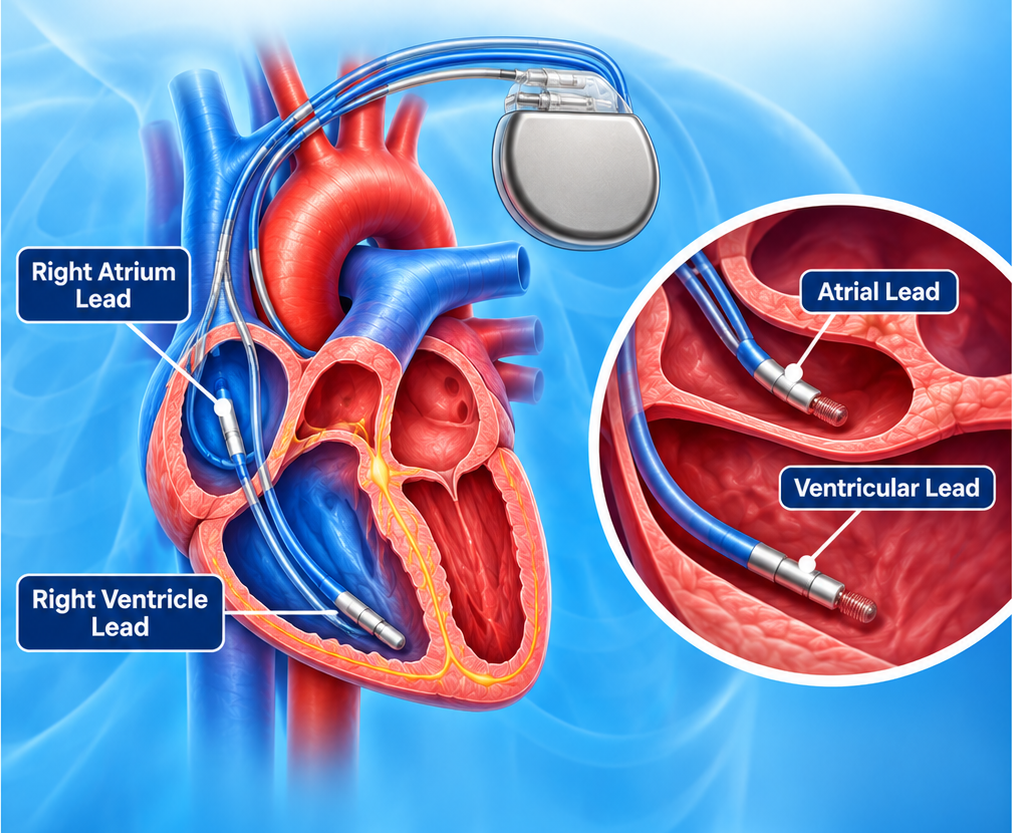
Pace Maker
It is a small medical device that helps regulate the heart’s rhythm when the heart beats too slowly or irregularly. It delivers carefully timed electrical impulses to help the heart maintain an appropriate and consistent rate.
Why is a Pacemaker Needed?
A pacemaker may be recommended for certain heart rhythm conditions, particularly when the heart’s natural electrical system does not maintain an adequate heartbeat. Common conditions include:
- Bradycardia (abnormally slow heart rate)
- Heart block
- Certain conduction disorders
- Some rhythm abnormalities causing dizziness, fainting, or fatigue
How Does a Pacemaker Work?
A pacemaker consists of a small pulse generator and, depending on the type, one or more leads that connect to the heart. The device continuously monitors the heart rhythm and delivers electrical impulses when needed to support an appropriate heartbeat.
Pacemaker Implantation
Pacemaker implantation is generally performed under local anaesthesia. A small incision is made, usually below the collarbone, and the leads are guided through a vein into the appropriate chambers of the heart. The pacemaker generator is then placed beneath the skin and connected to the leads.
Life After Pacemaker Implantation
Modern pacemakers are designed to support everyday activities and continuously monitor the heart’s rhythm. Regular follow-up and device checks are important to ensure the pacemaker is functioning properly and to monitor the patient’s heart health.
With appropriate evaluation, implantation, and follow-up, a pacemaker can provide reliable support for patients with certain heart rhythm and conduction problems.